

Last Updated: November 21, 2026
Quick Summary
Grading and valuing inherited coin collections starts with recording, separating and securing every piece before you value a single coin, and you should never clean anything. Photograph each coin in its holder, keep original packaging and notes, and store the collection somewhere dry and locked.
- Never clean a coin, because cleaning removes surface and originality and collectors generally pay less for it.
- Handle coins by their edges over a soft surface and keep them away from heat, sunlight and humidity swings.
- Record the country, denomination, date and mint mark for each coin, since a date alone tells you very little.
- Only completed, paid sales count as evidence of value; asking prices on marketplace listings are not evidence.
- Get at least two written offers and ask every buyer for the offer, the fee and the basis used.
Table of Contents
- First Steps After Inheriting a Coin Collection
- How to Handle and Store Coins Safely
- Identifying Coin Types, Dates and Mint Marks
- Building a Coin Collection Inventory Template
- A Practical Coin Grading Guide for Inherited Coins
- When Professional Coin Appraisal Is Worth the Cost
- Where to Sell Inherited Coins and How to Compare Offers
- Contact My Collectables for Graded Coin Guidance
- Frequently Asked Questions
First Steps After Inheriting a Coin Collection
Grading and valuing inherited coin collections starts with one rule: do not clean anything. A cleaned coin loses surface and originality, and collectors generally pay less for it (How to Recognize Cleaned Coins).
What should you do first? Record, separate and secure the collection before you value a single piece.
Start here:
- Photograph each coin as it sits, in its holder, before you move it
- Keep original packaging, envelopes and handwritten notes with the coins they came with
- Separate coins into trays by denomination and country
- Store everything somewhere dry and locked
Resist the urge to sort by "which ones look old". Age and value are different things, and a worn coin can outrank a shiny one. Get the collection stable first, then start learning what you have.
How to Handle and Store Coins Safely
Handle coins by their edges, over a soft surface, and never with bare fingers on the face.
Storage matters just as much. Coins need a dry, stable environment away from heat, sunlight and humidity swings. Paper envelopes and PVC plastic are the usual culprits behind long-term damage; inert holders and archival-quality albums are the safer choice.
A common mistake is storing a whole inherited collection in one heavy box in a garage. Garages flood, heat up and attract pests. Move the collection indoors, into a cupboard or safe, before you do anything else.
Identifying Coin Types, Dates and Mint Marks
Coin identification comes down to four details: the country, the denomination, the date and the mint mark. Read them in that order and most coins resolve quickly.
A mint mark is a small letter or symbol showing where a coin was struck. On Australian coins it usually sits near the date or below the design, and it can change a coin's rarity dramatically within the same year.
Work coin by coin:
- Note the monarch or design on the obverse
- Read the denomination and country on the reverse
- Record the exact date, including any variation
- Check for a mint mark near the date
- Note any obvious damage, holes or bends
If you cannot read a detail, photograph it under good light and magnify the image rather than guessing. Wrong identification at this stage sends the whole valuation off course.
Building a Coin Collection Inventory Template
A coin collection inventory template turns a shoebox of coins into a document you can act on. Use one row per coin, and fill in what you can see rather than what you hope.
| Field | What to record | Example entry |
|---|---|---|
| Reference number | Your own ID for the coin | A-014 |
| Country and denomination | Exactly as struck | Australia, 20 cents |
| Date | Full year, plus any variety | 1974 |
| Mint mark | Letter or symbol, or "none visible" | None visible |
| Condition estimate | Your rough grade, not a promise | Looks uncirculated |
| Metal and weight | Gold, silver, base metal; grams if known | Copper-nickel |
| Packaging | Holder, envelope, original card | Original paper envelope |
| Photos | File name of front and back images | A-014-front.jpg |
| Comparable sales | Source, date and realised price of similar coins | Auction result, 2025, AUD 85 |
| Grading decision | Self-value, grade, or appraise, and why | Self-value: common date |
| Notes | Damage, toning, provenance | Slight rim ding |
Fill in the reference number and photos before anything else. Provenance notes, such as who owned the coin and when it was acquired, are worth recording while family members can still confirm them.
Turning the sheet into a valuation. Work in three passes. First, sort every row into "common", "possible key date" and "unknown". Second, for the possible key dates, record at least two realised prices from completed sales of the same date, mint mark and approximate grade, not asking prices, which are frequently optimistic. Third, apply the grading decision tree below so you spend money only where the upside justifies it.
A simple grading decision tree:
- If the coin is common and circulated, and comparable sales sit below the cost of third-party grading plus shipping and insurance, self-value it and sell as a lot.
- If the coin is a suspected key date or shows original lustre, get an in-person opinion before paying for certification.
- If the coin is already in a third-party holder, verify the certification number with the grading company before you rely on the grade.
- If the collection is part of an estate or probate process, commission a written appraisal rather than relying on your own sheet.
Watch out: Asking prices on marketplace listings are not evidence of value.
A Practical Coin Grading Guide for Inherited Coins
Coin grading is the process of scoring a coin's condition on a standard scale, and it is separate from what the coin is worth.
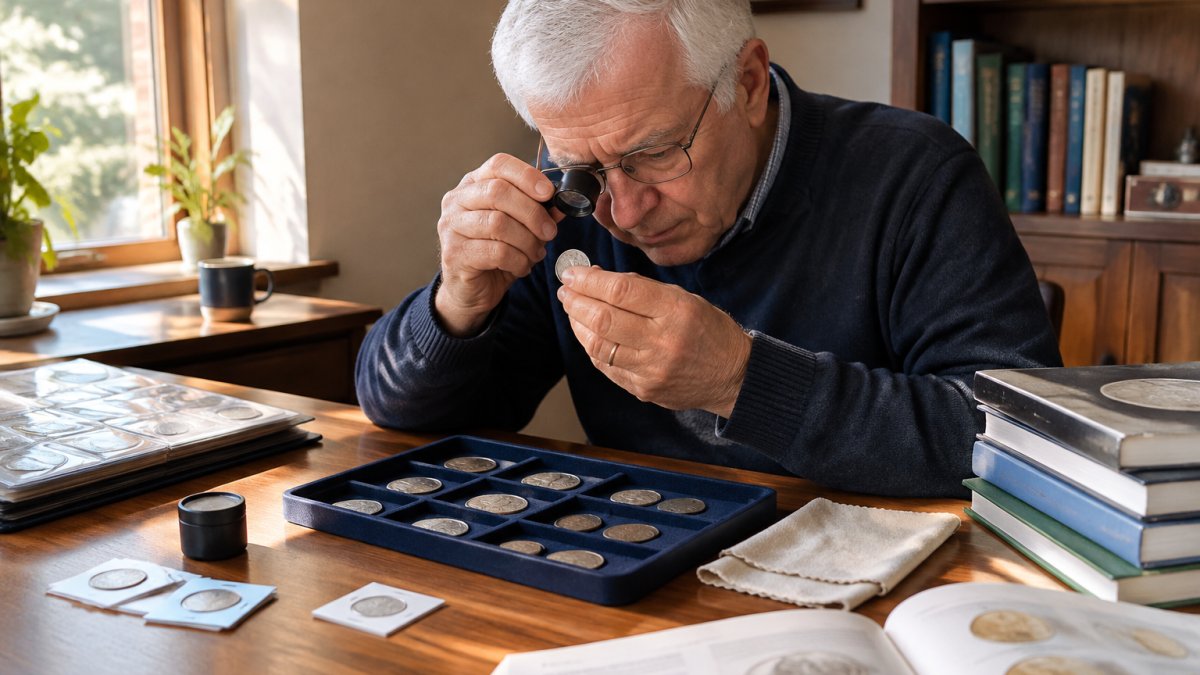
Rather than repeat the scale, use the five attributes graders actually weigh. Compare each coin against a known example of the same type, not against a different coin.
- Wear: Look at the highest points of the design first, the monarch's ear and hair, the emu's feathers, the kangaroo's paws. Rub these with a fingertip and you will feel the flat spots. A coin with full high points but dull fields is a different grade from one with slight flattening and original surface.
- Lustre: Tilt the coin under a single light. Original mint lustre flows continuously across the field and breaks only where the coin has been handled. A coin with lustre in the protected areas but none on the high points has circulated.
- Strike: Some Australian issues are notoriously softly struck, so weakness at the centre is not always wear. Compare the rim and lettering: a full rim with soft centres points to strike, not circulation.
- Marks: Count and locate bag marks and hairlines. A single heavy mark on the cheek of a portrait coin matters more than several light marks in the field, because the face is the focal area.
- Eye appeal: Toning, colour and overall balance. Attractive natural toning can lift a coin within its grade; heavy, blotchy or artificial toning can hold it back even when wear is low.
A side-by-side method beats memory.
As the American Numismatic Association's grading standards set out, the scale runs from About Good through to Mint State and Proof, with the Sheldon 1-70 numbers used alongside the descriptions.
Watch out: Grading from a photograph, especially a phone photo with flash, exaggerates lustre and hides hairlines.
When Professional Coin Appraisal Is Worth the Cost
Professional coin appraisal is worth the cost when the collection is large, when a single coin looks unusually high grade, or when you need a documented value for an estate.
Grading and appraisal are not the same service. Grading scores condition; an appraisal assigns a monetary value for a stated purpose, as the Journal of Antiques appraisal guide explains. Ask any appraiser which one you are paying for.
Our decision rule:
- Fewer than 20 common coins, no key dates: value them yourself and sell as a lot
- One or more suspected key dates or high grades: get an in-person appraisal first
- Estate or probate requirement: commission a written appraisal
- Coins already in third-party holders: check the certification number before paying anyone
Watch out: grading every coin in an inherited collection is rarely necessary, and grading fees can outweigh the value of ordinary pieces. Grade selectively, and only where the upside justifies it.
Where to Sell Inherited Coins and How to Compare Offers
Where to sell inherited coins depends on what you hold. Common material suits a dealer or an auction lot; high-grade and key-date coins suit specialist buyers and graded sales. What matters is comparing offers on the same basis.
Ask every buyer for the same three figures: the offer, the fee or margin deducted, and the basis used, such as recent realised prices for comparable sales rather than a price guide. A price guide is a starting point; a realised price from an actual auction is evidence. Get at least two written offers before you commit, and never hand over a collection for "assessment" without a receipt and a chain-of-custody record.
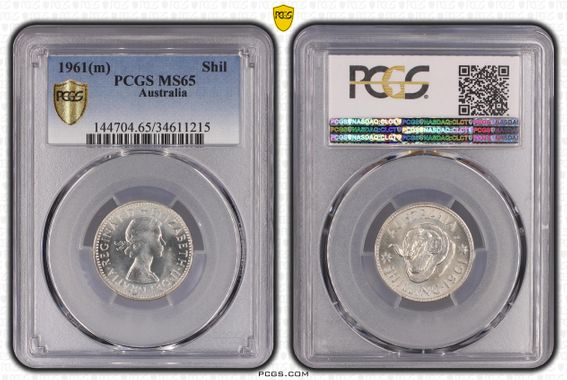
Independently graded coins, such as the 1961(m) Australia Shilling PCGS Graded MS65, are one example of how a certified coin is presented and priced.
Contact My Collectables for Graded Coin Guidance
The hardest part of an inherited collection is not the coins. It is deciding what to keep, what to grade and what to sell, without a clear benchmark for any of it.
My Collectables supplies numismatic products from the Royal Australian Mint and the Perth Mint, alongside professionally graded coins, and can talk you through how grading and certification work before you buy. If you are weighing up whether a coin deserves a holder, start with our graded coin guidance and ask us the questions you would ask an appraiser.
Inherited collections reward patience and punish guesswork. If you would rather have a second opinion before you grade, sell or insure a single coin, My Collectables can help you read the holder, understand the grade and judge whether the certification in front of you is worth the premium.
Frequently Asked Questions
How do I find out what an inherited coin collection is worth?
Start by sorting coins by type, date and condition, then record each one in a simple inventory. Check realised prices from recent auction results rather than guidebook figures alone, since guides often list retail asking prices. For anything that looks rare, such as low-mintage dates or uncirculated silver, get an in-person appraisal. A dealer can separate bullion value from collector value and tell you whether third-party grading would add enough to justify the fee.
Should I clean inherited coins before getting them valued?
No. Cleaning strips the original surface and can cut a coin's value sharply, even when it looks better to you. Leave patina, toning and dirt in place, handle coins by the edges, and keep them in acid-free holders. If a coin is already in original packaging or a sealed holder, leave it that way. Grading services treat cleaned surfaces as a defect, so a well-meant polish can turn a high-grade coin into a details-grade one.
Does every coin in an inherited coin collection need professional grading?
No. Grading fees can quickly outweigh the value of common decimal coins. Reserve certification for coins where the grade difference changes the price, such as key dates or uncirculated silver. As a benchmark, a PCGS-graded 1961(m) Australia Shilling MS64 is listed at $119.95, while the MS65 example is $135.95 at My Collectables, so the grade step matters on better coins, not on bulk material.
What is the difference between face value, melt value and collector value?
Face value is the denomination printed on the coin. Melt value is the market price of its precious metal content, which matters for pre-decimal silver and gold coins. Collector value reflects what a buyer will pay for rarity, condition and eye appeal, and it can sit far above both other figures. A common circulated 20 cent coin is worth face value, while a graded 1974 Australian 20C NGC MS65 is listed at $39.95 at My Collectables.
Should I get more than one valuation before selling inherited coins?
Yes, for any collection you believe is worth more than a few hundred dollars. Ask two or three dealers for written offers that state whether the price is a outright purchase or a consignment estimate, and check whether fees or dealer margin are deducted. Compare each offer against recent realised prices for similar grades. Keep your inventory and photographs so every valuer is assessing the same material.
What records should I keep when selling an inherited coin collection?
Keep your itemised inventory, photographs of each coin before sale, copies of appraisals and grading certificates, and every written offer you receive. Record the sale date, buyer, price and payment method for each coin or lot. These records support your cost-base position for tax purposes and help resolve any dispute with co-heirs. If the estate is being administered, give the executor copies before distribution.
